While having a strong grasp of Java fundamentals is important, preparing for senior developer roles also requires in-depth knowledge of advanced Java concepts. This PDF covers some key advanced topics in Java that you should study and understand to take your skills to the next level.


Multithreading in Java
- Understanding thread states like new, runnable, blocked etc
- Implementing Runnable and extending Thread class
- Using thread pooling with ExecutorService
- Synchronization using synchronized keyword, locks and monitors
- Deadlocks – how they occur and how to prevent
- Volatile keyword in Java
Java Collections Framework
- Sorting and searching algorithms like merge sort, quick sort etc
- Internal working of HashMap, LinkedHashMap and TreeMap
- Using NavigableMap and NavigableSet
- Understanding working of ConcurrentHashMap
- BlockingQueue and LinkedBlockingQueue
Java IO
- Streams vs readers/writers
- File, FileInputStream, FileOutputStream classes
- Serialization – externalizable vs serializable
- Working with Properties file
- Byte streams vs character streams
JVM Fundamentals
- Class loading process and loaders
- Understanding method area and heap space
- Java memory model
- Garbage collection algorithms
- Tracking memory leaks
Design Patterns
- Most commonly used creational, structural and behavioral patterns
- When to use singleton, factory, builder patterns
- Implementing decorator, observer, strategy patterns
- Understanding MVC, DAO patterns
Language Fundamentals
- Annotations in Java
- Varargs and lambda expressions
- Stream API, groupingBy, filtering
- Java NIO vs IO
- Regular expressions
- Reflection and proxies
Spring Framework
- Dependency Injection
- Aspect Oriented Programming (AOP)
- MVC architecture in Spring
- Spring Data JPA
- Spring Boot and microservices
I hope these advanced Java concepts help you increase your expertise and prepare for senior roles. Let me know if any area needs further elaboration or examples.
Conclusion
Let’s dive in and explore the world of Advanced Java Notes!
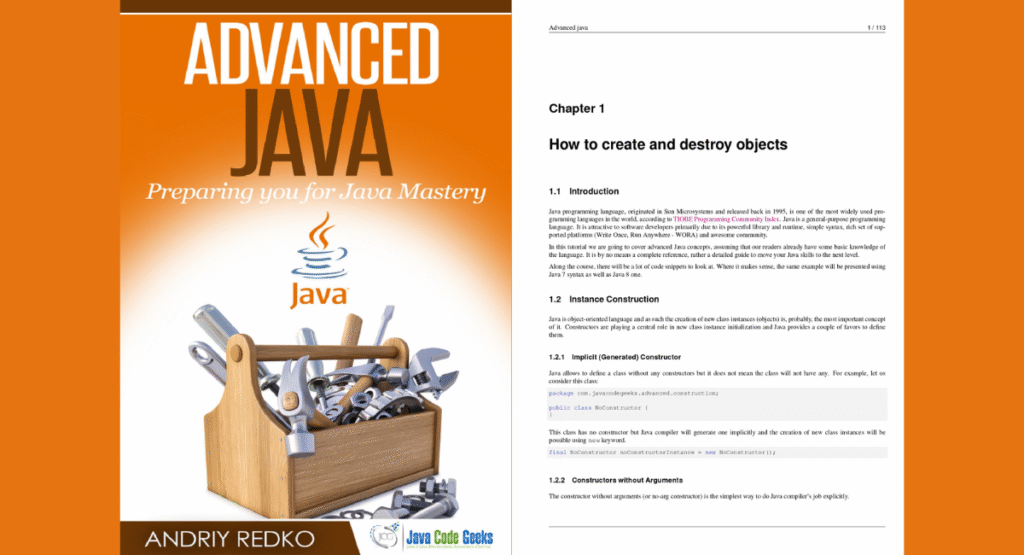
How to create and destroy objects
Using methods common to all objects
How to Design Classes and Interfaces
How and when to use Generics
How and when to use Enums and Annotations
How to write methods efficiently
General programming guidelines
How and when to use Exceptions
Concurrency best practices
Built-in Serialization techniques
How to use Reflection effectively
Dynamic languages support
Java Compiler API
Java Annotation Processors
Java Agents
Nu Of Pages
124 Pages
Download Advanced Java Notes from here
For Java Tutorial PDF From here